Factory: Sialkot, Pakistan Email: [email protected] Phone: (+92) 300 8467161
0%

Choosing among China’s best leather weightlifting belt manufacturers takes more than comparing prices or polished product photos. A dependable belt should feel firm around the waist, hold its shape under pressure, and show clean, even stitching along the edges. Leather thickness, layer construction, buckle strength, and consistent sizing all deserve close attention. Small details matter.

For training context, Dr. Stuart McGill’s research on spinal mechanics offers a useful principle, paraphrased here: “A belt may support bracing, but it cannot replace sound technique.” That distinction matters when evaluating Leather Weightlifting Belts. A well-made belt is training equipment, not a shortcut to safer or stronger lifting. Buyers should ask factories about leather specifications, construction methods, sample testing, and how they handle defects. Clear answers are more useful than broad claims such as “premium quality.”

China has manufacturers with different capabilities, from basic production to customized designs and export-ready packaging. Yet a supplier’s website alone cannot confirm workmanship. Request a physical sample. Check the buckle alignment, edge finishing, stitching tension, and comfort during movement. Then compare those details with the promised specifications. One sample still cannot prove every production run will match. That is an important limitation, and worth discussing before placing a large order. This guide introduces practical ways to assess manufacturers, ask sharper questions, and identify a belt that suits real training needs.

China Best Leather Weightlifting Belt Manufacturers?

What Defines a High-Quality Leather Weightlifting Belt?

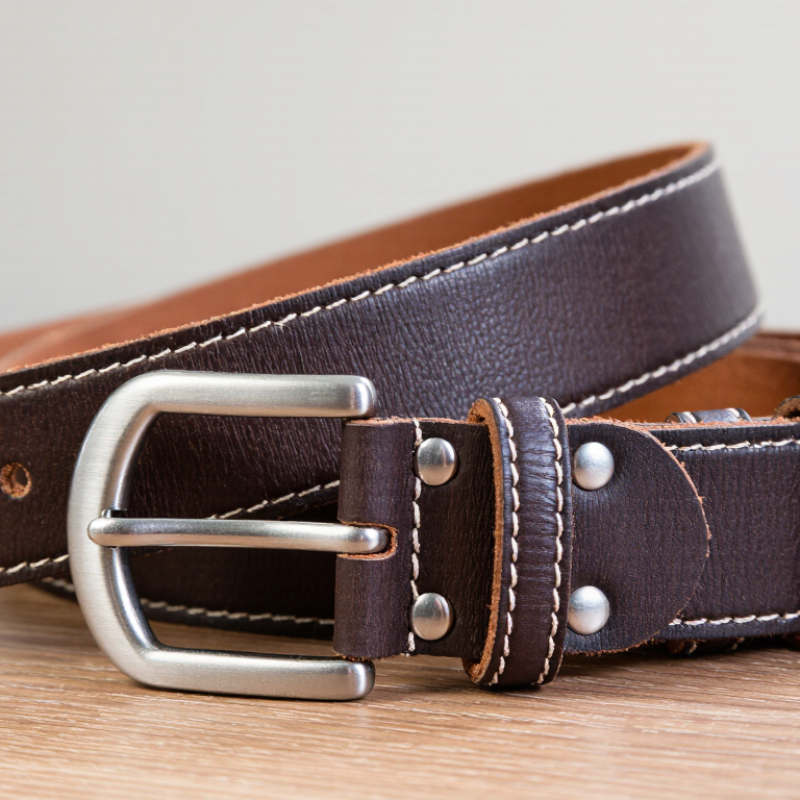
A high-quality leather weightlifting belt feels supportive without folding sharply under pressure. The leather should have consistent thickness from the center to the edges, with no brittle spots or deep surface cracks. Clear information about the leather type and construction matters more than a glossy finish. Natural marks may appear. That is not automatically a defect. Smell is not a reliable test.

Look closely at the stitching, edges, and buckle. Even, tight stitching helps keep the layers joined during repeated bracing. Smoothly finished edges are less likely to rub the waist during squats or deadlifts. The buckle should sit flat and feel secure when tightened; holes should be cleanly cut and evenly spaced. Small details count.

Fit is part of quality, too. A belt that digs into the ribs or hips can distract from lifting, even if its materials are excellent. Check that it stays in place while you bend and brace. Leather often needs a break-in period, and its stiffness can soften with use. That can be inconvenient. Still, soft leather is not always better: excessive flexibility may provide less consistent support. A practical inspection should consider construction, comfort, and intended training together.

How Leather Belts Are Designed and Manufactured in China

A leather weightlifting belt begins with its intended use: supporting the torso under load without digging into the ribs. Designers set the belt’s width, thickness, taper, and buckle position, then check how those features fit different body shapes. In Chinese factories, production commonly moves from hide inspection and cutting to skiving, stitching, edge finishing, and hardware installation. The leather’s grain and thickness can vary, so cutting plans should keep weaker areas away from high-stress seams. Small details matter. A buckle that sits slightly off-center can make a belt feel uneven during a lift.

China’s established manufacturing network offers access to leather processors, sewing workshops, and metal-component suppliers. The World Footwear Yearbook 2024 reports that China produced roughly 55% of the world’s footwear in 2023; this is footwear data, not a belt-production estimate, but it indicates the scale of the country’s related manufacturing base. Quality checks should still be product-specific. Manufacturers can inspect stitching consistency, buckle attachment, and material thickness, then test leather tensile strength using ISO 3376 methods. Ask for documented test conditions, not just a pass claim. A sample may look excellent and still perform poorly under repeated bending. That gap deserves attention.

China Best Leather Weightlifting Belt Manufacturers? - How Leather Belts Are Designed and Manufactured in China

Design or Production Dimension Typical Options or Process What Buyers Should Check
Leather selection Common choices include full-grain, top-grain, and split leather. Leather thickness and stiffness affect the belt’s feel, break-in time, and support. Request the leather type, finished thickness, and a physical sample. Confirm that material descriptions are consistent across samples and production orders.
Belt profile Powerlifting-style belts are often a uniform width, while tapered designs are narrower at the front. Width and thickness are selected according to the intended use and user preference. Specify finished dimensions and tolerances, including width, thickness, length, and taper. Check measurements at multiple points on a sample.
Layer construction A belt may use a single leather layer or multiple bonded layers. Construction influences rigidity, edge finishing, and overall thickness. Confirm the number and type of layers, bonding method, and whether the stated thickness refers to the finished belt.
Pattern development and cutting Patterns are prepared to match the chosen belt profile and size range. Leather pieces may be cut using dies or other cutting equipment, with attention to grain direction and visible defects. Review size charts, pattern accuracy, cut-edge consistency, and how natural leather variations are handled.
Stitching and edge finishing Depending on the design, belts may have perimeter stitching, finished or burnished edges, and protective coatings. Stitching is generally used to help secure the construction and finish the appearance. Inspect stitch spacing, skipped stitches, loose threads, edge smoothness, and coating uniformity on pre-production samples.
Buckle and fastening hardware Common configurations include a single-prong buckle, double-prong buckle, or lever-style closure. Hardware material, finish, and attachment method vary by design. Check buckle dimensions, finish, attachment security, closure operation, and compatibility with the belt’s hole spacing and thickness.
Fit and sizing Sizes are usually planned around the wearer’s waist measurement and intended adjustment range. Hole count and spacing determine how finely the belt can be adjusted. Ask for a measurement guide that explains where to measure and how belt length is defined. Verify usable adjustment range rather than relying on a size label alone.
Surface treatment and color Leather may be dyed, coated, embossed, or left with a more natural finish. Color and surface appearance can vary between leather hides. Approve a color reference and clarify acceptable variation, finish durability, and care instructions before production.
Quality checks Typical checks can include visual inspection, dimensional measurement, hardware operation, stitching review, and examination of bonding and edges. Agree on written acceptance criteria, sampling levels, defect categories, and inspection timing before mass production.
Packaging and shipment preparation Belts can be packed individually or in grouped cartons. Packaging choices should protect the leather and hardware from scuffing, moisture, and deformation in transit. Confirm packaging materials, carton quantity, product labeling, shipping marks, and whether packaging requirements have been tested with a packed sample.
Note: The options above describe common design and manufacturing considerations for leather weightlifting belts. Actual materials, dimensions, processes, and quality requirements vary by product specification and should be confirmed with samples and written documentation.

Key Criteria for Evaluating Chinese Belt Manufacturers

When evaluating Chinese leather weightlifting belt manufacturers, look beyond a polished catalog. Ask what leather is used, how thickness is measured, and whether the supplier can maintain consistent specifications. A belt should feel firm without sharp edges. Inspect the inner surface, punched holes, buckle, and stitching on a physical sample. Small details matter. Request samples from the production line intended for your order, then compare them side by side.

Check workmanship with practical tests, not claims alone. Pull the buckle under load, flex the belt repeatedly, and see whether holes stretch or layers separate. Ask for production tolerances, inspection records, and the process for handling defects. A capable factory should explain these clearly and provide dated photos or test results. Compare stated capacity and lead times with recent production examples; a confident estimate is not proof.

Communication is another useful quality signal. Confirm who approves materials, how changes are recorded, and what happens when bulk goods differ from the approved sample. Request written specifications for leather, width, thickness, stitching, hardware, packaging, and acceptable variation. No supplier is perfect. A review can still miss a weak batch, so retain reference samples and inspect goods before shipment. An independent inspection adds evidence, but cannot guarantee every belt performs identically.

How to Compare Manufacturer Capabilities and Product Quality

When comparing leather weightlifting belt manufacturers in China, look beyond catalog photos. Ask about leather grades, thickness options, stitching methods, and how belt dimensions are checked. A capable factory should explain its process clearly and provide samples that match the proposed specifications. Request details on production capacity and lead times, too. Promises are easy; consistent records are more useful.

Inspect a sample under practical conditions. Check whether the edges feel smooth, the holes are evenly spaced, and the buckle sits firmly without twisting. Look for dense, even stitching around stress points, especially near the buckle and adjustment holes. Ask how the maker checks leather consistency between batches. A polished sample can flatter a supplier; it may not represent every production run. That limitation deserves attention. Compare multiple samples when possible, and confirm agreed measurements in writing before placing an order.

Tips: Photograph each sample beside a ruler, record its thickness and weight, and test the buckle repeatedly. Ask for a replacement sample if details differ from the specification. One check is never enough.

Steps for Verifying and Sourcing a Chinese Belt Supplier

Steps for Verifying and Sourcing a Chinese Belt Supplier

Start by requesting a specification sheet for the leather, belt width, thickness, stitching, and buckle material. Ask how each item is checked during production. Clear answers matter. Vague claims about “premium leather” are not enough. Request close-up photos of the edges, holes, and stitching, then compare them with a physical sample. Check whether the belt bends evenly and whether the buckle feels secure. Small checks matter.

A polished sample can still hide uneven batch quality. Ask for a sample from a recent production run, if available, and confirm that its measurements match the written specifications. Discuss minimum order quantities, production lead times, packaging, and the supplier’s process for handling defects. Keep those details in a dated quotation or purchase document. Ask for factory photos or a live video walkthrough, and verify that the facility shown actually makes the belts. A visit or independent inspection may provide stronger evidence.

Before placing a large order, agree on acceptable tolerances for dimensions and finish. Request a pre-shipment inspection with photos and a written report. I would not treat one good sample as proof of consistent production; that assumption is easy to make, and hard to fix later. Compare several suppliers using the same checklist, not just the lowest price. A slower, clearer conversation often reveals more than a glossy product sheet.

How to Verify and Source a Chinese Weightlifting Belt Supplier

Suggested 100-point buyer evaluation rubric. The point allocations are a practical framework, not supplier rankings or market statistics.

Request and verify business and export documents, written material and product specifications, production samples, quality-control evidence, and clear pricing and shipping terms before placing an order.

FAQS

What should I compare when choosing a leather belt manufacturer?

Compare leather grade, thickness, stitching, dimensions, production capacity, and lead times. Ask for clear records, not just catalog photos.

How can I inspect a sample belt?

Check smooth edges, evenly spaced holes, dense stitching, and a buckle that stays firm. Photograph it beside a ruler.

What details belong on a specification sheet?

Include leather, width, thickness, stitching, buckle material, and measurement checks. Vague claims are not enough.

Does a polished sample prove consistent production quality?

No. A sample may look better than later batches. Ask for one from a recent production run.

How can I check whether a sample matches the agreed specifications?

Measure its width and thickness, record its weight, and test the buckle repeatedly. Small checks matter.

What should I confirm before placing an order?

Agree on order quantities, lead times, packaging, defect handling, and acceptable tolerances. Keep them in dated written documents.

How can I verify that a factory makes the belts?

Request factory photos or a live video walkthrough. A visit or independent inspection may offer stronger evidence.

What inspection should I request before shipment?

Ask for photos and a written pre-shipment report. One sample is not enough.

Should I choose the supplier with the lowest price?

Compare suppliers with the same checklist. A slower, clearer conversation can reveal useful details, though it is easy to overlook.

Conclusion

Choosing the right Chinese manufacturer for Leather Weightlifting Belts starts with understanding what makes a belt dependable: strong, properly finished leather, secure stitching, reliable buckle hardware, and a fit suited to its intended use. A well-made belt reflects careful design and consistent production, from selecting and cutting materials to assembly and quality checks.

When comparing manufacturers, consider their production capabilities, material options, customization services, quality-control processes, communication, and ability to meet order requirements. Request product specifications and samples, inspect construction and finishing, and clarify pricing, lead times, packaging, and shipping arrangements before making a decision. By checking these details and verifying supplier information, buyers can make a more informed choice and build a sourcing relationship based on product quality, clear expectations, and dependable service.

Ethan

Ethan

Ethan is a professional marketing specialist dedicated to helping customers better understand our company’s products, solutions, and industry expertise. With a strong background in market research, content strategy, and customer communication, he transforms complex product information into clear,......