Choosing China’s top Soccer Uniforms manufacturers requires more than comparing factory prices. Global buyers must examine fabric performance, production control, communication, and documented quality procedures. A polished catalogue can hide inconsistent sizing, weak stitching, or delayed shipment planning.
John Devlin, football-kit historian and author of True Colours, once observed, “A football shirt is never just a shirt.” That idea matters to clubs, academies, schools, and professional teams. A uniform carries identity. It must also survive repeated washing, wet training sessions, tackles, and long travel days.
Reliable Chinese suppliers usually explain their polyester fabric options clearly. Buyers should ask about moisture management, fabric weight, collar construction, color fastness, and print durability. A practical sample should be tested before bulk approval. Check the sleeve seams. Measure the shorts. Wash the shirt several times.
Small details expose big risks.
Experienced manufacturers can support sublimation printing, embroidered badges, sponsor placement, youth sizing, and mixed-size order sets. They should also provide production samples, inspection records, packaging details, and realistic lead times. Certifications can support confidence, but they never replace physical inspection.
Some buyers focus too heavily on the lowest quotation. That approach often creates hidden costs through rework, rushed freight, or rejected goods. I have also seen supplier websites look impressive while their size charts remain unclear. That is a warning sign, not a minor inconvenience.
This guide evaluates China’s leading Soccer Uniforms manufacturers through product quality, customization capability, export experience, factory transparency, and buyer support. The ranking is not absolute. Team needs differ. A local academy may value flexibility, while a global club may prioritize consistency across thousands of garments.
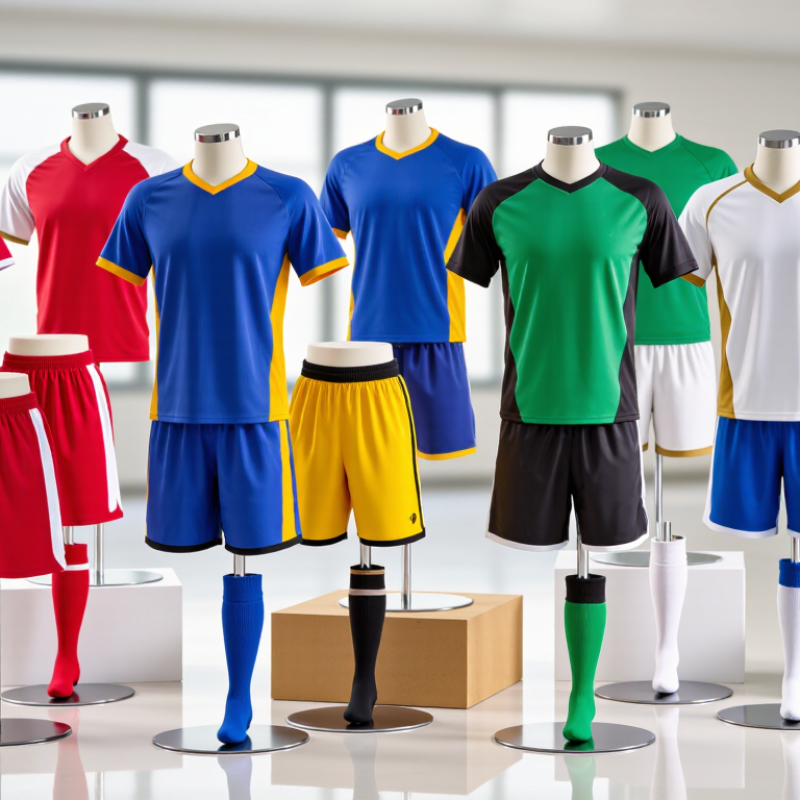
Define Ranking Criteria: MOQ, Sample Lead Time, Capacity, Certifications, and Price
Global buyers should rank Chinese soccer uniform manufacturers by evidence, not polished catalogs.
MOQ is the first practical filter.
A factory asking for 1,000 sets may suit a league, but not a trial order. Ask whether mixed sizes, colors, and player names count toward MOQ. Request a written quotation with fabric weight, printing method, packaging, and shipping terms.
Vague pricing creates expensive surprises.
Sample lead time reveals production discipline.
A serious supplier should state artwork approval, cutting, sewing, and delivery dates separately. For a standard sublimated sample, seven to fourteen days can be reasonable. Complex embroidery may require longer. Inspect collar stretch, seam strength, color accuracy, and number durability after washing.
One attractive sample proves little.
Rushed samples can hide sizing problems.
Capacity must match seasonal demand.
Ask for monthly output, peak-season schedules, and backup plans for fabric shortages. Certifications should be verified against the actual facility and product scope. Quality, environmental, and social compliance records deserve careful review.
Price also needs context.
A low unit price may exclude sample fees, revisions, packaging, or freight. Compare landed cost, not catalog cost. Ranking can remain imperfect because factory data changes and audits have limits. Use a scorecard, retain inspection rights, and test a small batch before scaling.
Segment China’s Soccer Uniform Makers into OEM, ODM, and Custom Teamwear
For global buyers, Chinese soccer uniform manufacturers are easier to assess when divided by production role. OEM factories follow buyer-supplied tech packs, approved fabrics, measurements, and artwork. This suits established clubs with fixed designs and repeat orders. A practical buyer should request a pre-production sample, fabric composition, colorfastness data, and a clear size chart. Details matter. The sample should be checked after washing, not only under showroom lights.
ODM suppliers start with existing patterns or seasonal concepts, then adjust colors, trims, collars, and sponsor panels. They can shorten development time, but similar base designs may serve other customers. Ask about pattern ownership, artwork charges, minimum order quantities, and revision limits. Samples reveal gaps. An experienced sourcing team compares the digital layout with the stitched garment, since small changes affect ventilation and player movement. The division is useful, but not absolute.
Custom teamwear makers focus on smaller clubs, schools, academies, and tournament groups. They commonly manage player names, numbers, mixed sizes, and staggered delivery. This service needs disciplined order control: one approved roster, one numbering system, and signed artwork. Buyers should verify fabric weight, seam strength, moisture management, packaging, and inspection procedures before payment milestones. A low quotation can hide weak grading or rushed finishing. Practical reviews often find attractive prototypes failing at sleeve fit or number alignment. Production photos, random measurements, and a documented correction process remain valuable, even for simple orders.
Compare Fabrics by 120–160 GSM Polyester, Wicking, and Colorfastness
China’s leading soccer uniform manufacturers increasingly offer 120–160 GSM polyester for global buyers. The weight difference is practical. A 120 GSM knit feels lighter and dries faster in hot, humid stadiums. A 160 GSM fabric offers better opacity, structure, and abrasion resistance during repeated tackles.
GSM alone does not prove performance. Wicking depends on yarn shape, knit construction, and finishing chemistry. AATCC TM195 evaluates liquid moisture management through spreading speed, absorption rate, and one-way transport. Buyers should request test results, not rely on “breathable” claims. Small details matter. Mesh panels can improve airflow, but poor stitching may reduce durability.
Colorfastness needs equal attention. ISO 105-C06 assesses color change and staining after washing, while ISO 105-X12 evaluates rubbing, including wet crocking. For matchwear, a practical purchasing target is grade 4 or better on the five-point grey scale. Textile Exchange’s Materials Market Report 2024 reports polyester represented about 57% of global fiber production in 2023, showing why specification discipline matters at scale. Recycled polyester may support sourcing goals, but it does not automatically improve wicking or color retention. A common sampling mistake is testing only a fresh shirt. Wash printed and dark panels repeatedly, then inspect white socks and sponsor areas for transfer. Some factory claims remain incomplete without seam-strength and post-wash data.
Verify Factory Quality with ISO 9001, AQL 2.5, and 4-Point Inspection
For global buyers, a Chinese soccer uniform factory should prove quality beyond attractive samples. ISO 9001 is a useful starting point, not a guarantee. The ISO Survey 2023 reported more than 1.26 million ISO 9001 certificates worldwide. Buyers should verify the certificate number, issuing body, factory address, and production scope.
Ask for an AQL 2.5 inspection plan based on ANSI/ASQ Z1.4. AQL 2.5 does not mean 2.5% of shirts may fail. It defines a sampling acceptance level. Inspectors should record sample size, critical defects, major defects, and minor defects separately. Check team badges, sleeve seams, sponsor-free artwork placement, color consistency, and measurements after washing.
Use a 4-point fabric inspection before cutting. This system scores defects by severity and length, helping detect weaving bars, stains, holes, and shade variation. Textile Exchange’s Materials Market Report 2024 estimated global fiber production at 124 million tonnes in 2023. That scale makes traceability and consistent fabric control increasingly important.
A certificate can sit on a wall while a collar still twists. Require dated inspection photos and signed reports. Do not rely only on factory claims. An experienced auditor should compare bulk goods with the approved sample. Some factories pass sampling but repeat packing errors. That is an uncomfortable weakness worth reviewing. Practical evidence remains stronger than polished paperwork.
China Soccer Uniform Factory Quality Verification: AQL 2.5 Sampling Example
The chart shows example acceptance and rejection numbers for AQL 2.5 under single normal inspection, General Inspection Level II. ISO 9001 verifies the factory’s quality-management system, while a 4-point inspection evaluates garment defects by severity and location. AQL sampling results should be confirmed against the applicable ANSI/ASQ Z1.4 or ISO 2859-1 tables and buyer specifications.
Assess Global Fulfillment Through HS 6112, Incoterms, and 30–45-Day Lead Times
China Top Soccer Uniform Manufacturers for Global Buyers?
Global buyers should treat HS 6112 as a classification checkpoint, not a guaranteed code for every soccer uniform. It generally covers knitted or crocheted track suits, ski suits, and swimwear. Some uniform sets may fall elsewhere, depending on fabric, design, and construction. Ask for the garment composition, product photos, and a customs broker’s review before shipment. A small classification mistake can delay clearance or change the landed cost.
Incoterms must match your actual logistics control. Under FOB, the supplier delivers goods to the loading port, while the buyer manages the main freight and import process. CIF includes freight and insurance to the destination port, but import clearance remains the buyer’s responsibility. DDP may appear simple, yet tax registration and local compliance can make it unsuitable in some markets. Confirm who pays duties, handles documents, and accepts delivery risk.
A 30–45-day lead time usually means production, not arrival. Allow time for size-set approval, artwork confirmation, fabric sourcing, inspection, and transit. In practical orders, one delayed sample can affect the entire schedule. Build a buffer.
Peak seasons create pressure.
Request a dated production schedule and carton details before paying. Suppliers should explain minimum quantities, inspection standards, replacement terms, and document control in writing. I would not rely on a promised date alone; real fulfillment often depends on approvals that buyers underestimate.
Conclusion
Choosing the right China-based soccer uniform manufacturer requires more than comparing prices. Global buyers should evaluate suppliers through clear criteria, including minimum order quantity, sample lead time, production capacity, certifications, and total cost. Manufacturers can be grouped into OEM, ODM, and custom teamwear suppliers, each offering different levels of design flexibility and production support. Fabric selection is also essential: 120–160 GSM polyester can provide a practical balance of comfort, durability, breathability, and cost, while moisture-wicking performance and colorfastness help maintain quality during frequent use and washing.
Factory verification should include ISO 9001 documentation, AQL 2.5 quality standards, and a structured four-point fabric inspection process. Buyers should also assess international fulfillment capabilities, including appropriate HS 6112 classification, clearly defined Incoterms, and realistic 30–45-day production lead times. By reviewing these factors systematically, purchasers can identify reliable partners for high-quality Soccer Uniforms and reduce risks related to inconsistent quality, delays, and unexpected logistics costs.