Who makes dependable protective gear for knees and elbows in China? The answer depends on the sport, user, and level of protection required. China’s manufacturing sector includes suppliers serving cycling, skating, motocross, workwear, and general sports markets. Their products can look similar online, yet differ in shell design, padding, stitching, fit, and quality-control practices. A close look at these details helps buyers move beyond product photos.
This guide examines how to identify leading Knee and Elbow Pads manufacturers, without treating sales rankings as proof of quality. It compares product range, materials, customization options, manufacturing experience, communication, and available evidence of testing and inspection. Buyers can request current specifications, clear photographs, sample units, and written answers about production capacity. Small details matter. A stiff strap or rough seam may affect comfort after an hour of movement. Padding that feels firm in a showroom may behave differently during repeated use. Samples tell more. Supplier claims deserve careful checking; a polished catalog cannot replace a sample or a transparent process. No single factory suits every buyer. Requirements vary, and public information may be incomplete. This overview offers a starting point, not a guarantee of performance. Compare each manufacturer against the intended use, budget, and required product features—not just price or promotional language. That is a more practical way to shortlist Chinese suppliers and make an informed sourcing decision.
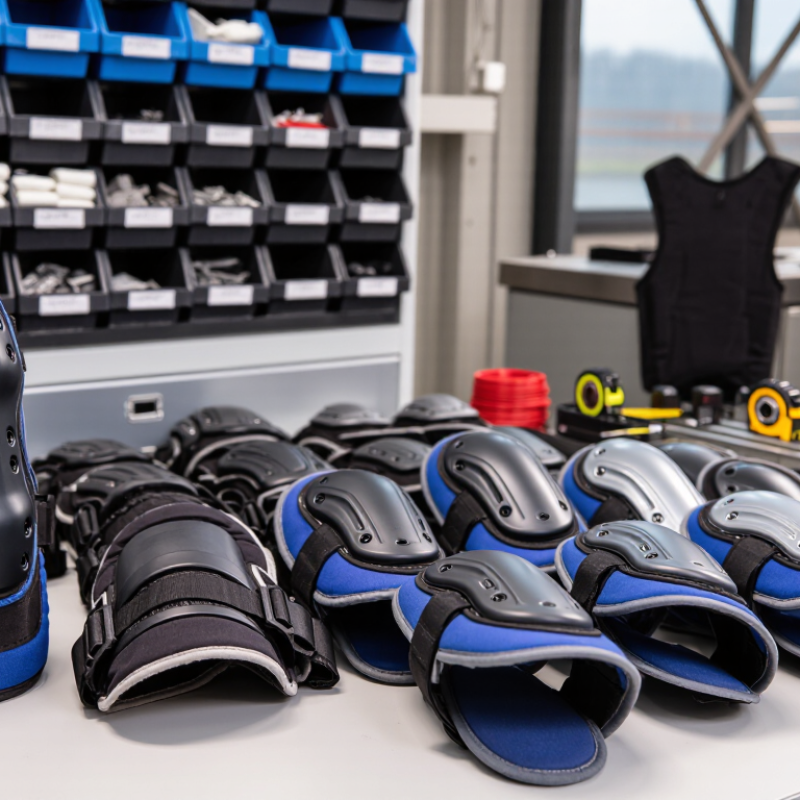
Understanding China’s Knee and Elbow Pads Manufacturing Industry
China’s knee and elbow pad industry brings together material suppliers, cutting facilities, molding workshops, and sewing lines. Manufacturers may handle the full process or coordinate several specialist suppliers. Product design balances impact absorption, ventilation, fit, and cost. The shell, foam thickness, and strap placement all affect how a pad feels during movement.
Production can involve cutting fabric, molding protective inserts, sewing covers, and attaching elastic straps. Common materials include EVA foam, nylon fabric, and molded plastic, but specifications vary by intended use. Details matter. A pad that feels firm on a sample may shift during repeated bending. That is easy to miss. Fit trials, seam checks, and compression tests can reveal problems before a larger order begins.
Factory capability is not measured by machinery alone. Ask how materials are tracked, dimensions checked, and approved samples matched during production. Test records help compare batches, but they cannot replace hands-on evaluation. Some facilities handle custom development well; others are better suited to repeat orders. This difference can complicate sourcing. Allow time for revisions, especially when protection, weight, airflow, and price compete. A neat sample is reassuring, but it is not proof of consistent production.
How to Assess Leading Knee and Elbow Pad Manufacturers
Assess a manufacturer by evidence, not polished product photos. Request material specifications, pad thickness, shell construction, and stitching details for each model. Ask how impact performance is tested, and whether reports identify the tested size and configuration. Vague claims are not enough. Check whether samples match production units in shape, seam placement, and closure strength. That is where differences show.
Tips: Wear samples over the clothing users actually wear. Bend, kneel, and reach repeatedly; note slipping, heat, and pressure behind the joint. A quick showroom try-on can miss these issues.
Review the factory’s incoming-material checks, in-line inspections, and batch records. Ask who approves changes to foam, fabric, or suppliers, and how defects are handled. Confirm lead times, minimum order quantities, and replacement-sample procedures in writing. A capable team should explain limitations plainly, not promise identical results across every size. Compare at least two production samples, since one good sample proves little. No checklist catches everything.
Major Knee and Elbow Pads Manufacturers in China
China’s major knee and elbow pad manufacturers range from specialist sewing workshops to integrated sports-protection factories. Many offer OEM or ODM production, combining stretch fabrics, foam padding, molded shells, and adjustable straps.
Grand View Research valued the global sports protective equipment market at about US$3.7 billion in 2022 and forecast 5.6% annual growth from 2023 to 2030.
This covers multiple product categories, not pads alone, so it signals broader demand rather than a pad-specific sales figure.
A capable supplier should explain its materials and process clearly. Ask for fabric composition, foam density, seam construction, and batch-level inspection records. Check how pads stay in place during bending, not only how they look on a flat sample.
Fit matters most.
The category is less tidy than buyers expect: two pads with similar padding can feel very different after an hour of movement. I would not treat a polished sample as proof of consistent bulk production.
Tips:
Request samples in several sizes and test them with the intended clothing and movement. Confirm labeling, packaging, and inspection criteria in writing before ordering. Ask the factory how it handles a failed batch; vague answers are a warning sign.
Comparing Manufacturers by Products, Quality, and Capabilities
Knee and elbow pad manufacturers in China differ less by catalog size than by what they can consistently produce.
Some focus on basic foam sleeves for skating or cycling; others offer hard-shell designs with adjustable straps, removable liners, and different impact-absorbing materials.
Ask for samples in the exact size range you plan to order.
A polished sample is useful, but not proof of repeatable production.
Quality checks should go beyond appearance.
Inspect stitching around strap anchors, shell edges, and high-flex areas. Check whether padding shifts after repeated bending and whether fasteners hold under steady pulling.
Request material specifications and records for any tests the factory says it performs.
Then confirm that production samples match the approved version.
Small differences matter.
Capabilities also affect delivery.
A factory with in-house cutting, sewing, molding, and assembly may coordinate changes more directly, while outsourced steps can add handoffs. Ask who controls each process, how defects are recorded, and how replacement parts are handled.
Request a clear sample schedule, production capacity, and order minimums.
These figures need context; a low minimum does not guarantee dependable output. I would still verify the details. Compare factories using the same questions, and treat confident promises as a starting point, not evidence.
How to Choose a Suitable Chinese Manufacturer
Choosing a Chinese knee and elbow pad manufacturer requires more than comparing unit prices. Grand View Research estimated the global sports protective equipment market at USD 1.9 billion in 2022 and projected a 4.6% compound annual growth rate from 2023 to 2030. This broader market figure signals demand, but it does not prove a supplier’s quality. Ask how the factory controls foam density, shell thickness, seam strength, and sizing consistency. Request test reports for the exact model, not a similar sample. For roller-sports products, EN 14120 covers requirements for wrist, palm, knee, and elbow protectors. Confirm which tests apply to your intended use.
Tips: Request a production sample and inspect it yourself. Bend the pad repeatedly; check whether seams pull, straps slip, or hard shells develop sharp edges. Ask for material specifications, batch records, and a clear inspection plan. A neat sample is not the whole story. Production can vary.
Compare suppliers using the same checklist: sample lead time, minimum order quantity, customization limits, defect handling, and communication speed. Ask to see how incoming materials and finished goods are checked. If possible, arrange an independent inspection before shipment. A low quote may still fit your needs, but unclear test evidence or vague quality procedures deserve a second look.
Conclusion
China’s Knee and Elbow Pads manufacturing industry serves a wide range of sports, outdoor, and protective-gear needs, with manufacturers differing in product focus, production scale, and customization options. To identify leading suppliers, buyers can assess experience with protective equipment, material selection, product design, manufacturing capacity, quality-control procedures, communication, and ability to meet delivery requirements. A careful review of these factors helps distinguish established production partners from suppliers whose capabilities may be less suitable for a particular project.
When comparing manufacturers, consider the range of knee and elbow pad styles they produce, the comfort and durability of their materials, consistency between samples and bulk orders, and available testing or inspection processes. The right Chinese manufacturer is not necessarily the largest; it is the one that best matches the intended use, specifications, order volume, budget, and timeline. Clear requirements, sample evaluation, and direct discussion of production and quality expectations can support a more informed and reliable sourcing decision.