Whitepaper: Engineering & Manufacturing Dynamics of Technical Compression Wear
The global compression apparel market has evolved from specialized medical vein-support garments into an essential high-performance athletic category. Modern athletes, fitness enthusiasts, and tactical personnel rely heavily on graduated compression technology to enhance deep-vein hemodynamics, stabilize muscle vibration, reduce delayed onset muscle soreness (DOMS), and accelerate lactate clearance during intense endurance events.
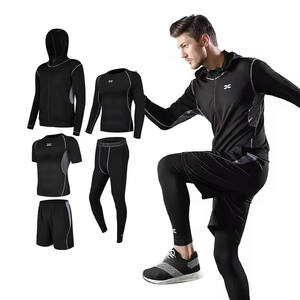
As a leading China compression wear manufacturer and global exporter, our facility bridges the gap between advanced textile biomechanics and scalable, mass-market manufacturing. Operating vertically integrated production lines equipped with high-gauge circular knitting, 3D seamless weaving, and automated pattern placement, we deliver private label compression gear engineered precisely according to pressure profile specifications (15–20 mmHg athletic recovery grade to 20–30 mmHg performance medical grade).
Dynamic compression garments function by applying targeted external surface pressure to underlying anatomical structures. This controlled pressure gradient is calculated using Laplace's Law ($P \propto T / R$), where pressure ($P$) is directly proportional to fabric tension ($T$) and inversely proportional to limb radius ($R$). By applying maximum compression at distal extremities (e.g., ankles and wrists) and gradually decreasing pressure proximally (e.g., thighs and upper torso), our engineered apparel assists the venous muscle pump in driving oxygen-depleted blood back toward the heart.
Furthermore, during high-impact activities such as marathon running or plyometric training, skeletal muscle oscillation creates micro-trauma in muscle fibers. Our warp-knitted elastane structures absorb kinetic vibrations, minimizing lateral muscle movement, reducing mechanical fatigue, and conserving metabolic energy for the athlete.
3rd Gen
Manufacturing Heritage
30+
Global Export Countries
AQL 2.5
Quality Control Standard
25-40 Days
Rapid Bulk Lead Time
Advanced Polymer & Yarn Architectures in Compression Manufacturing
Selecting the optimal fiber matrix is paramount when manufacturing elite activewear and active recovery garments. Unlike standard casual knits, technical compression apparel requires high-elasticity synthetic blends that retain mechanical hysteresis under repeated strain cycles without structural sag or elastic breakdown.
Nylon-Spandex (Polyamide-Elastane) Blends
Utilizing high-denier Polyamide 6.6 combined with Creora® or LYCRA® elastane (typically 18% to 32% spandex ratios). Offers superior surface abrasion resistance, ultra-soft hand feel, and exceptional recovery force under extreme elongation.
Polyester Microfiber & Sublimation Matrices
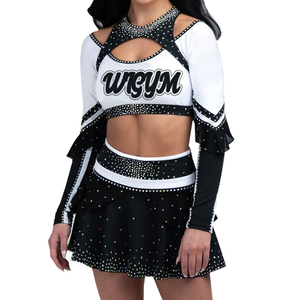
Engineered for high-definition 230°C digital sublimation printing (ideal for team uniforms and cheerleading apparel). Interlock micro-mesh channels capillary action, driving sweat away from the dermis to the outer fabric surface for instant evaporation.
3D Seamless Tubular Knitting
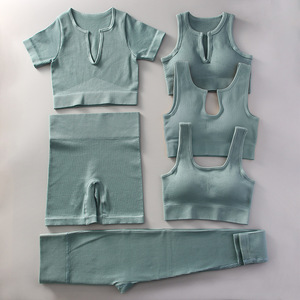
Constructed on Italian Santoni seamless machinery. Enables localized compression zone mapping directly into the knit matrix—eliminating traditional side seams, reducing friction points, and enhancing multi-directional 4-way stretch flexibility.
Material Performance Specification Matrix
Fabric Composition
GSM Range
Compression Class
Primary B2B Application
Key Performance Attribute
78% Nylon 6.6 / 22% Spandex
220 - 280 GSM
Class I (15-20 mmHg)
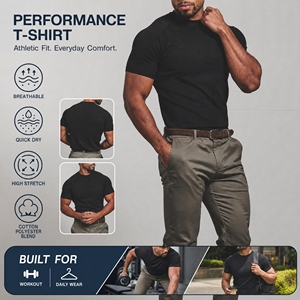
Gym Leggings & Muscle T-Shirts
Squat-proof opacity, silky hand-feel, zero pilling
70% Polyester / 30% Elastane
240 - 300 GSM
Class II (20-30 mmHg)
Marathon Singlets & Tri-Suits
High sublimation vibrancy, maximum strain recovery
Sourcing & Production Procurement Trends (2025–2030)
The activewear procurement landscape is undergoing dynamic structural shifts. Brands and bulk buyers must align their supply chains with emerging consumer expectations, regulatory frameworks, and technological breakthroughs. As an industry pioneer in China's textile exporting ecosystem, we identify three critical procurement vectors for international buyers:
1. Sustainable & Bio-Based Compression Synthetics
Environmental compliance is no longer optional. Global retail brands are shifting from virgin petroleum synthetics toward GRS-certified (Global Recycled Standard) recycled nylons sourced from ocean waste (ECONYL®) and bio-based elastane derived from industrial corn starch. Our manufacturing lines now support eco-friendly dyeing processes that reduce water consumption by 40% and eliminate hazardous fluorocarbons (PFC-free DWR finishes).
2. Smart Garment Integration & Conductive Yarns
Next-generation athletic apparel is merging with biometric monitoring. Future compression baselayers will integrate silver-coated conductive yarns directly into chest bands and quadriceps panels. This allows embedded sensors to track muscle activation (EMG), heart rate variability (HRV), and core body temperature without bulky external chest straps. Our R&D pattern room is actively prototyping knit-in conductive channel pathways for tech-forward sportswear brands.
Inventory risk management has pushed brands toward flexible procurement models. B2B buyers now demand lower minimum order quantities (MOQ) coupled with rapid turnaround capabilities for custom teamwear, cheerleader uniforms, and seasonal color drops. By deploying automated laser cutters and high-speed digital sublimation printers, we empower brand owners to launch high-complexity designs with minimal initial capital risk.
Our 6-Stage Quality Control & Manufacturing Ecosystem
Consistent garment sizing, robust seam strength, and zero-defect output are guaranteed through our strictly enforced quality management system. Every purchase order follows a fully documented audit trail from yarn intake to sealed export cartons.
Stage 01
Raw Fabric Inspection & GSM Testing
100% of incoming fabric bolts undergo 4-point visual inspection, GSM density verification, shade-matching against spectrophotometer standards, and lab testing for shrinkage and color fastness.
Stage 02
Automated Pattern Grading & Laser Cutting
CAD-generated graded tech packs are fed into computer-controlled automatic spreading machines and hydraulic laser cutters. Ensures precise panel dimensions down to 0.5mm tolerances.
Stage 03
Specialized Chain-System Assembly
Constructed using Japanese Yamato 4-needle 6-thread flatlock machines (ISO 607 stitch type). Eliminates internal seam ridge bulk, offering smooth zero-chafing seams capable of enduring 300% strain extension.
Stage 04
In-Line Roving QC & Stress Audit
Quality inspectors execute hourly roving audits on every active line, testing seam tensile strength, bartack reinforcement points, rhinestone heat-adhesion stability, and heat-transfer logo durability.
Stage 05
Boiler Steam Pressing & Finishing
Finished compression pieces undergo industrial boiler steam pressing on custom aluminum body-forms to set garment memory, stabilize dimensional recovery, and inspect hand-feel.
Stage 06
Final AQL 2.5 Pre-Shipment Inspection
Independent QA inspectors pull randomized samples according to MIL-STD-105E / ISO 2859-1 standards. Verification includes carton barcode integrity, polybag safety compliance, and size ratio accuracy.
Why Sourcing Buyers & Global Brands Choose Our Factory
Navigating global supply chain friction requires a factory partner that offers total transparency, proven technical capabilities, and predictable delivery schedules. Here is how our OEM/ODM infrastructure supports your brand growth:
Full Private Label Branding Execution
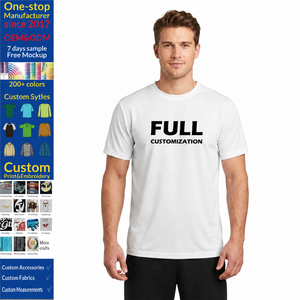
We handle every branding detail in-house: woven neck labels, custom silicone print sizing, high-definition heat transfer reflective logos, custom hangtags, branded frosted zipper polybags, and custom master shipping cartons.
Rapid Prototyping & Tech Pack Support
Send us your vector artwork, hand sketches, or physical reference garments. Our pattern engineering team delivers physical fit samples and sublimation color strike-offs within 7 to 12 working days.
Flexible Order Quantities (Low MOQ)
We accommodate both scaling startup brands and established multinational distributors. Sublimated teamwear runs start at just 50 pcs/style, while complex cut-and-sew apparel starts at 150–300 pcs across size assortments.
Frequently Asked Questions (FAQ) for Global Buyers
What is your minimum order quantity (MOQ) for custom compression wear?
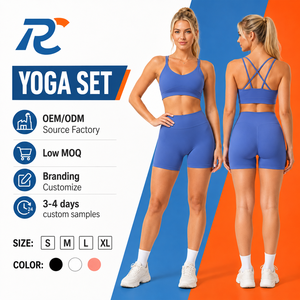
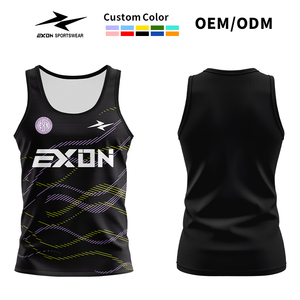
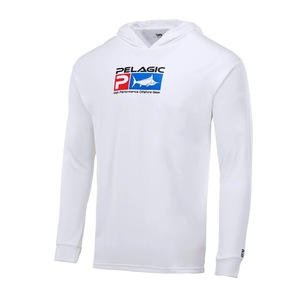
Our MOQs are structured to accommodate various manufacturing techniques. For sublimated team kits (such as cheerleading uniforms, fishing hoodies, and running singlets), our MOQ starts at 50 pieces per style. For custom cut-and-sew activewear, seamless 2-piece yoga sets, and complex compression tights, our baseline MOQ is typically 150 to 300 pieces per style across up to 4 colorways and multiple sizes.
What is the lead time for sampling and bulk production?
Fit samples and sublimation strike-offs are completed within 7 to 12 working days following tech pack approval. Bulk mass production requires 25 to 40 calendar days depending on fabric milling, custom dyeing requirements, embellishment complexity, and total order volume. Repeat orders utilizing existing approved patterns run on accelerated timelines.
Do you provide full private label ODM development from scratch?
Yes! Our in-house R&D design center offers complete original design manufacturing (ODM). We turn initial mood boards, reference photos, or concept descriptions into graded digital patterns, precise 3D garment mockups, tech packs, and production-ready physical prototypes.
How do you ensure zero see-through (squat-proof) quality on compression leggings?
Squat-proof performance is achieved by utilizing high-density circular knitting (28-gauge to 32-gauge machines) with minimum fabric weights of 230 to 280 GSM. We conduct rigorous mechanical stretch testing (2-way and 4-way stretch elongation) under intense light conditions prior to cutting to guarantee complete opacity during maximum flex.
What quality standards and factory compliance certifications do you hold?
Our manufacturing facilities operate strictly under ISO 9001 quality management systems and ISO 14001 environmental standards. All raw fabrics, elastane yarns, and sublimation inks are certified under OEKO-TEX® Standard 100, ensuring they are free from harmful chemicals, heavy metals, and carcinogenic dyes. We welcome third-party inspections (SGS, BV, Intertek, TUV) prior to final shipment loading.
Ready to Scale Your Activewear & Compression Apparel Line?
Partner with China’s trusted OEM/ODM manufacturer for superior performance textiles, custom branding, and reliable bulk delivery worldwide.