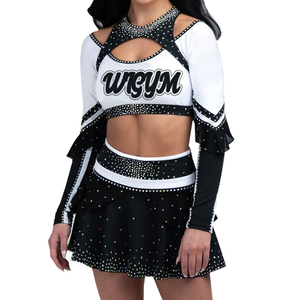
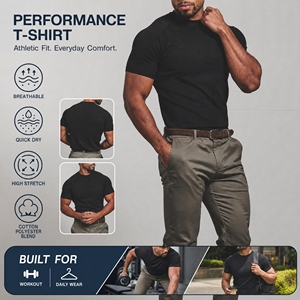
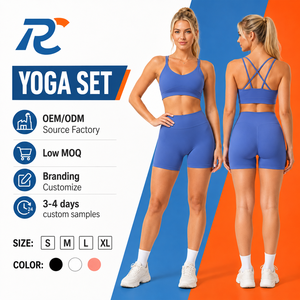
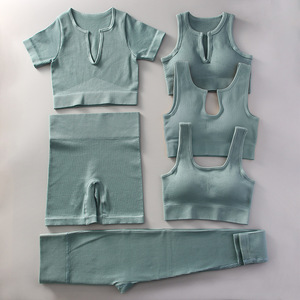
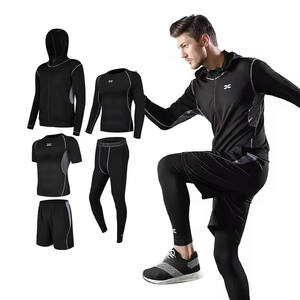
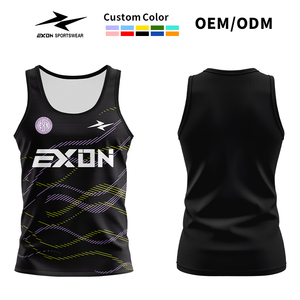
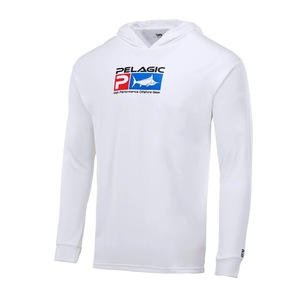
Direct from our specialized production lines in Sialkot, Pakistan. Engineered with precision cut-and-sew, sublimation printing, and reinforced seam structures for sports teams, commercial brands, and wholesale distributors worldwide.
In today's highly regulated global market, selecting top trusted head protection factories and suppliers requires an in-depth understanding of engineering standards, materials science, and supply chain accountability. Modern head protection—ranging from industrial hard hats and ballistic helmets to soft-shell tactical headwear, cycling safety helmets, and impact-resistant athletic headbands—demands uncompromising compliance with international standards such as ANSI/ISEA Z89.1, EN 397, CPSC 1203, and ASTM F1492.
As a third-generation OEM/ODM manufacturing group rooted in Sialkot, Pakistan's world-renowned manufacturing hub, Haraka Sports integrates advanced structural protection with ergonomically designed performance textiles. True B2B sourcing superiority lies not merely in assembly, but in full vertical integration: from high-density polymer molding and rotational shock dissipation systems to sublimated dry-fit liners, moisture management fabric technology, and flame-retardant head wraps.
By evaluating suppliers through strict Quality Assurance (QA) metrics—including batch-level tensile testing, impact attenuation profiling, and ISO-audited social compliance—global brands can systematically eliminate supply chain volatility while capitalizing on high-margin OEM/ODM opportunities.
Explore how cutting-edge material science, rotational impact dissipation, smart sensors, and bio-based polymers are defining the future of personal protective equipment (PPE) and athletic headgear.
Traditional head protection evaluated linear force absorption exclusively. Modern manufacturing now incorporates low-friction slip-plane systems (such as multi-directional impact protection technology) that allow 10–15mm of relative movement during angled impacts. This dramatically reduces rotational kinematics transferred to the brain. Leading factories are integrating low-friction polycarbonate layers directly into expanded polystyrene (EPS) or dual-density EPP liners during in-mold manufacturing.
Weight reduction without structural sacrifice remains the holy grail of head protection. Advanced suppliers are transitioning from standard ABS/polycarbonate injection molding to resin-transfer molded (RTM) carbon fiber and aramid/Kevlar composites. These hybrid shells yield up to a 35% weight reduction while exhibiting superior penetration resistance under extreme temperature variations (-30°C to +50°C).
The intersection of safety hardware and digital telemetry has birthed smart helmets featuring integrated tri-axial accelerometers and piezoelectric force sensors. These micro-sensors continuously record g-force thresholds and transmit real-time telemetry via Bluetooth mesh networks to safety supervisors or medical staff, immediately alerting team leaders to critical concussive impacts or structural fatigue.
How top procurement directors, brand owners, and OEM buyers are optimizing supply chains, mitigating tariff risks, and enforcing strict compliance standards in 2025 and beyond.
Geopolitical shifts and freight volatility have forced procurement executives to abandon single-source dependencies. Leading global brands are adopting a Dual-Region Strategy, pairing East Asian component manufacturing with versatile, vertically integrated hubs in South Asia like Sialkot, Pakistan. Pakistan's established textile and specialized hardware ecosystem allows fast-turnaround sampling (7–12 days) and flexible bulk production cycles (25–40 days), shielding buyers from single-point supply disruptions.
rigid Minimum Order Quantities (MOQs) of 5,000+ units are rapidly fading. Modern agile brands require test-and-repeat models. Premier manufacturers now support low-MOQ development runs starting at 50 pieces for sublimated team apparel/headwear and 150–300 pieces for complex cut-and-sew programs. This low-risk entry barrier enables brands to validate market demand before committing capital to mass production runs.
Physical sampling iterations traditionally wasted 4–6 weeks of pre-production lead time. Top-tier factories utilize CAD/CAM digital twin software and 3D virtual fitting simulations to model stress distribution, fabric drape, and headgear shell dimensions. Graded tech packs can now be signed off digitally in days, cutting development costs by up to 60% and guaranteeing millimeter-accurate physical samples on the first physical strike-off.
Corporate Sustainability Due Diligence Directives (CSDDD) require buyers to verify supplier environmental footprint and labor ethics. Forward-thinking suppliers offer fully traceable supply chains featuring recycled polyester (rPET) liners, non-toxic water-based sublimation inks, bio-based EPS foam cores, and SMETA / BSCI social audit certifications for all manufacturing facilities.
Benchmark key parameters when choosing a certified head protection and technical gear supplier.
| Parameter | Entry-Level OEM Supplier | Standard Commercial Factory | Haraka Sports (Premier Tier) |
|---|---|---|---|
| Primary Materials | Standard Recycled ABS / Polypropylene | Polycarbonate Shell + Single-Density EPS | Carbon/Kevlar Hybrid + Dual-Density EPP/EPS + rPET Liners |
| Quality Control Standard | Visual Spot Checks (No Documentation) | End-line Visual Inspection | Documented AQL 2.5 In-Line & Pre-Shipment Audit Protocol |
| Safety Certification Testing | Basic Internal Checks | Third-Party Annual Testing | Lot-wise Lab Audits: Impact Attenuation, GSM, Tensile & Fastness |
| Sampling Lead Time | 20–30 Working Days | 14–20 Working Days | 7–12 Working Days (With Tech Pack Approval) |
| MOQ Flexibility | 1,000+ Units / Style | 500 Units / Style | 50 Pcs (Sublimated) / 150-300 Pcs (Cut & Sew) |
| Accountability & Reporting | Email Only / Sales Intermediary | Monthly Progress Summaries | Dedicated English Merchandiser + Weekly Photo Milestones |
Combining three generations of family craftsmanship with modern industrial automation, localized manufacturing infrastructure, and transparent supply chain governance.
Our operational footprint spans two fully equipped manufacturing complexes in Sialkot, Pakistan: our Primary Facility on Daska Road and a dedicated Second Unit in the Small Industries Estate. Having multi-unit capacity allows parallel production lines for technical outerwear, apparel, and hardware, eliminating operational bottlenecks.
From raw yarn testing and high-speed digital sublimation printing to precision pattern grading, hydraulic cutting presses, specialized chain-stitching lines, and final polybag artwork packaging—every phase occurs under our direct control. You own your custom patterns and proprietary tech specs.
Every incoming fabric lot is quarantined until our QA lab verifies GSM, dimensional stability, color fastness (to wash, rub, and perspiration), and pilling resistance. During assembly, hourly in-line roving checks enforce zero-defect standards before final boiler steam pressing and packing.
Sourcing failures often stem from poor communication. We assign a single dedicated, fluent English-speaking account manager to every order. Buyers receive weekly written status reports and photo/video evidence at fabric cutting, line stitching, and final carton sealing milestones.
Serving established brands across 30+ countries, we excel in consolidating diverse product lines—combining performance apparel, activewear, hoodies, and protective accessories into single export shipments. This drastically lowers international freight overhead and simplifies customs clearance.
We welcome buyer-nominated third-party inspection agencies (such as SGS, Bureau Veritas, or Intertek) at any stage of production. Cartons already sealed for shipment can be randomly sampled without notice, guaranteeing total integrity prior to bill of lading release.
Nothing advances to the next stage without a signed quality checklist. Here is how your purchase order is executed inside our facilities.
Incoming fabrics and raw components undergo laboratory evaluation for weight (GSM), width consistency, shrinkage rates, and shade-band matching against approved buyer swatches. Non-conforming lots are immediately rejected.
Utilizing computer-optimized marker plans to maximize yield, panels are cut via hydraulic presses or digital cutters. Size-coded bundle numbering prevents cross-shade panel mixing during stitching.
Workpieces enter specialized assembly lines where individual operators master dedicated seam tasks (flatlock, overlock, coverstitch, or reinforced bar-tacking). Hourly roving QC officers enforce stitch density (SPI) compliance.
Garments and headgear liners are thread-trimmed, steam-pressed on high-pressure boiler units to lock in shape memory, and systematically audited against graded dimensional spec sheets.
Independent internal auditors pull random units from completed production batches to verify branding, heat-transfer adhesion, seam strength, barcode labels, and polybag compliance before signing release certificates.
Cartons are palletized, moisture-sealed, and dispatched with fully compliant Commercial Invoices, Packing Lists, Certificates of Origin, and export customs clearance documentation for seamless delivery.
Direct, expert answers to the most common technical and operational questions posed by international sourcing teams.
Partner with a proven 3rd-generation OEM/ODM manufacturer in Sialkot, Pakistan. Contact our engineering and merchandising team today for technical swatches, instant quotations, and fast-track sampling.
Send an Inquiry